
Soups & Stews
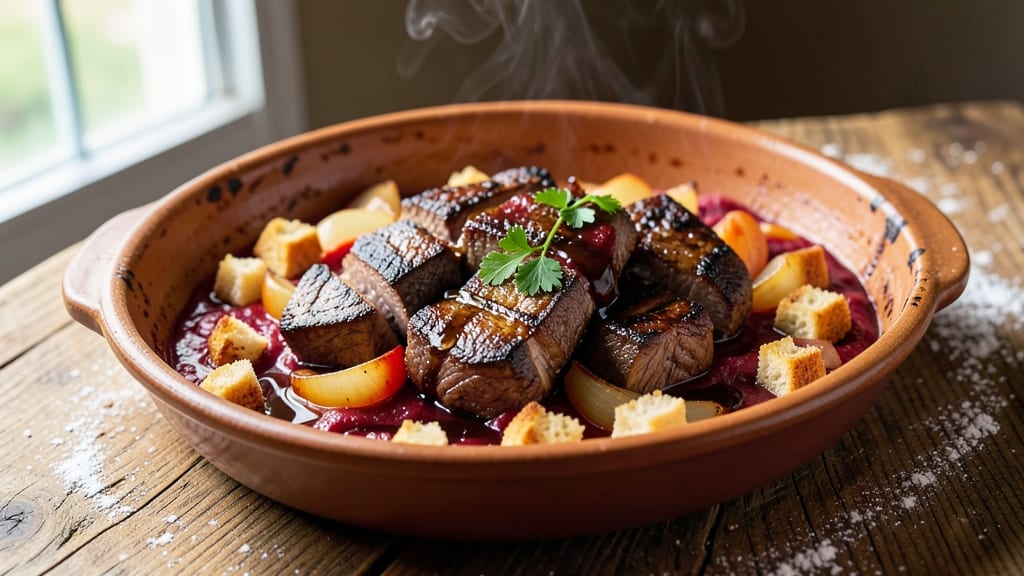
This beef and brandy recipe transforms tough cuts into melt-in-your-mouth tenderness with layers of deep, caramelized flavor. The brandy's warmth cuts through rich red wine, creating a sauce that coats every forkful—restaurant-quality without the fuss.
I developed this braise after years of perfecting the balance between slow cooking and bold flavors, ensuring the onions develop those signature sweet, jammy layers while the beef stays fork-tender.
The secret lies in proper searing and deglazing—critical steps that build flavor from the bottom of the pot. You'll start with beef chuck, browned deeply to lock in juices, then deglaze with brandy for that signature aromatic punch.
The red wine reduction happens gradually, allowing the alcohol to cook off while concentrating the sauce's depth. This isn't just a stew; it's a transformative dish that turns simple ingredients into something extraordinary.
What you'll end up with is a deep-red braise where caramelized onions form luscious layers, beef falls apart at the touch, and the sauce clings perfectly to every bite. The brandy's lingering warmth balances the wine's acidity, creating a harmony that's both rich and refined.
Serve it over creamy mashed potatoes or with crusty bread to soak up every last drop—this is comfort food elevated to fine dining.
Perfect for weeknight dinners or special occasions, this recipe delivers foolproof results with minimal effort. The long braising time (about 3 hours) means you can prep ahead and walk away, returning to a kitchen filled with intoxicating aromas. Let's get cooking—your taste buds will thank you.
Ingredients for beef and brandy
Here's what you'll need to create this restaurant-quality beef and brandy braise.
| Ingredient | Amount | Notes |
|---|---|---|
| Beef Chuck Roast 🥩 | 3 lb | Well-marbled, cut into 1.5-inch cubes |
| Yellow Onions 🧅 | 4 whole | Large, peeled, sliced into 1/4-inch rounds |
| Brandy 🍷 | ½ cup | Good quality, 80-proof minimum |
| Dry Red Wine 🍷 | 2 cups | Bold variety like Cabernet Sauvignon |
| Beef Broth 💧 | 2 cups | Low-sodium preferred |
| Tomato Paste 🍅 | 2 tbsp | Smooth, no sugar added |
| Garlic Cloves 🧄 | 6 cloves | Peeled, smashed |
| Fresh Thyme 🌿 | 2 tbsp | Leaves only, stems removed |
| Olive Oil 🫒 | 2 tbsp | Extra-virgin for searing |
| Salt 🧂 | 1 ½ tsp | Kosher or sea salt |
| Black Pepper 🌶️ | 1 tsp | Freshly ground |
| Balsamic Vinegar 🍶 | 1 tbsp | For finishing |
| Fresh Parsley 🌿 | ¼ cup | Chopped, for garnish |
The beef chuck is non-negotiable here—look for good marbling at the meat counter. Costco or Whole Foods have the best cuts, but your local butcher can trim it perfectly if you ask. The onions are the secret weapon: yellow onions caramelize best, and you'll want to slice them evenly for consistent cooking. Brandy matters too—avoid cooking brandy if you can't find 80-proof; it won't have enough alcohol to deglaze properly. For the wine, Cabernet Sauvignon or Merlot work best—they stand up to the brandy's intensity.
No brandy? Substitute with apple cider plus 1 tsp vanilla extract—it mimics the warmth. The red wine can be swapped for beef broth with 1 tbsp balsamic vinegar if you're avoiding alcohol. Fresh thyme is ideal, but dried works at one-third the amount. The tomato paste can be omitted if you prefer a lighter sauce, but it adds that umami depth that makes this dish sing. For the onions, red onions add color but won't caramelize as nicely—stick with yellow for this recipe.
This braise tastes even better the next day, so make extra if you're feeding a crowd. Store in the fridge for up to 5 days or freeze for 3 months. I always portion mine into containers—one for lunches, one for leftovers. The onions can be prepped ahead and refrigerated overnight, which actually makes them sweeter. The beef cubes will brown beautifully in the Dutch oven, so use that if you have one—it's perfect for this recipe.
Why You'll Love This Recipe
- One-Pot Magic: I swear by this—just toss the chuck roast, onions, and brandy into one pot, then walk away. No chopping like a fine-diner, no stressing over separate pans. The wine and broth do all the heavy lifting while you sip something stronger (or weaker, no judgment).
- Brandy Bomb: That first sip of brandy-hit sauce? It’s like a little hug for your taste buds. The deep caramel notes from the slow cook meld with the beef’s richness—honestly, I’ve caught myself pouring extra just to taste it. (Don’t judge me.)
- Leftovers That Shine: This isn’t one of those sad, dry reheats. The sauce thickens up even better the next day, and it’s perfect for wraps, sandwiches, or just reheating with a splash of water. My lunchbox hero for a week.
- Budget Feast: A chuck roast stretches farther than you’d think, especially when you’re making a whole pot. The brandy and wine might sound fancy, but they’re the secret to stretching that beef into multiple meals without breaking the bank. (Yes, even on a Tuesday night.)
Step-by-step instructions for beef and brandy braise
This rich, layered braise delivers melt-in-your-mouth beef with caramelized onions and deep brandy-wine flavor.
Sear the Beef Chuck Roast
Heat a heavy Dutch oven over medium-high heat and add 2 tablespoons olive oil. Once shimmering, add the 3 lb beef chuck roast cut into 1.5-inch cubes in a single layer. Let them sear undisturbed for 3-4 minutes per side until deeply browned with a crust forming. This initial sear locks in juices and builds deep flavor.
Work in batches if needed to avoid crowding the pan. Season each piece generously with 1.5 teaspoons salt and 1 teaspoon black pepper as you sear. Once all beef is browned, transfer it to a plate and set aside. You'll notice the onions will take center stage next, so don't rush this step—proper searing makes all the difference.
Caramelize the Onions in Layers
In the same Dutch oven, reduce heat to medium-low and add half of the 4 whole yellow onions sliced into ¼-inch rounds. Cook undisturbed for 10-12 minutes, stirring only when edges start to brown, until deeply golden and caramelized. This slow cooking transforms the onions into sweet, jammy layers.
Remove the caramelized onions to a plate and set aside. Add the remaining onions to the pot and repeat the process. Here's the thing—don't skip this layering. The onions will form the flavor base for your braise, and proper caramelization takes time. If they brown too quickly, reduce heat further to prevent burning.
Build the Brandy-Wine Sauce
Return the seared beef to the Dutch oven along with the caramelized onions. Add 6 smashed garlic cloves, 2 tablespoons tomato paste, and 2 tablespoons fresh thyme. Stir to combine, letting everything toast for 1-2 minutes until fragrant. This step develops the aromatic foundation of your braise.
Pour in the ½ cup brandy and immediately tilt the pot to coat all surfaces with the alcohol. Let it bubble for 1-2 minutes to burn off the raw alcohol flavor. Then add 2 cups dry red wine and 2 cups beef broth, scraping up any browned bits from the bottom. This deglazing captures all the flavor locked in during searing.
Braise Until Tender
Bring the liquid to a simmer, then cover the Dutch oven and transfer to a 325°F oven. Braise for 2.5-3 hours until the beef is fork-tender and easily pulls apart. The sauce should thicken slightly as it reduces, creating a rich, velvety consistency that coats every bite.
I check for doneness by piercing a beef cube with a fork—it should slide in easily with no resistance. If the sauce reduces too quickly, add a splash of water or broth to maintain moisture. The longer it braises, the more tender and flavorful the beef becomes, so resist the urge to rush this step.
Finish and Garnish
Remove the braise from the oven and stir in 1 tablespoon balsamic vinegar. Let it simmer uncovered on the stovetop for 5-7 minutes to reduce slightly and deepen the flavors. Taste and adjust seasoning if needed—this is where you ensure every element balances perfectly.
Garnish with ¼ cup chopped fresh parsley just before serving. The bright herb cuts through the richness of the braise, adding a fresh finish. Serve immediately with crusty bread or over mashed potatoes to soak up every last drop of that luxurious sauce. This dish tastes even better the next day, so plan ahead—it rewards patience with incredible depth of flavor.
Pro Tips For Making Beef And Brandy
- Sear the Roast First: I learned this the hard way—skipping the sear means a bland, gray slab of beef instead of rich, caramelized flavor. Heat your Dutch oven until it’s smoking hot, then sear the chuck roast on all sides for 3-4 minutes per side. The crust locks in juices and turns that beef into something irresistible.
- Deglaze Immediately: That browned crust on the bottom of your pan? Don’t scrape it off—it’s pure flavor. After searing, pour in the brandy (careful, it’ll flame—keep the pan away from you) and let it cook off completely. Then add the wine and onions. Skipping this step means missing out on the deepest, most complex taste in the dish.
- Use Real Brandy, Not Substitutes: Yes, it’s pricier, but cooking brandy (the good stuff) makes a real difference. The alcohol burns off, leaving behind a warm, fruity depth that cheap brandy or even cognac can’t replicate. If you’re pinching pennies, at least grab a decent bottle—your sauce will taste it.
- Simmer Low and Slow: After adding the broth, resist the urge to crank the heat. A gentle simmer (just tiny bubbles breaking the surface) for 2.5–3 hours keeps the beef tender and the sauce rich, not watery. I used to rush it, and the meat would turn out chewy—now I set a timer and let it do its thing. Your future self will thank you.
Best sauces and condiments for these flavors
Brandy Reduction Magic
The brandy's role here is all about flavor concentration—it deglazes the pan after searing, capturing those precious browned bits that hold deep umami. I always use ½ cup high-quality brandy (like Courvoisier or Christian Brothers) because cheaper versions lack the complexity.
Pour it in carefully, then immediately tilt the pot to coat all surfaces—this ensures maximum flavor extraction. The alcohol burns off in 1-2 minutes, leaving behind a rich, caramelized base that forms the sauce's soul. 🍷
Red Wine Reduction
After the brandy burns off, add 2 cups bold red wine (I prefer Cabernet Sauvignon or Malbec) to deepen the sauce's body. Let it simmer gently for 10-15 minutes to reduce by about 25%, concentrating the flavors.
This step transforms the liquid into a velvety, wine-infused sauce that clings beautifully to the beef. For extra depth, add 2 tablespoons tomato paste—it adds a subtle sweetness that balances the wine's acidity. Pro tip: Use a wide Dutch oven to maximize surface area for faster reduction.
Balsamic Vinegar Finish
A final splash of 1 tablespoon balsamic vinegar (like Balvenie or Barbieri) adds a tangy brightness that cuts through the richness. Simmer it uncovered for 5-7 minutes to let the flavors meld. This isn't just about acidity—it also adds a subtle caramelized note that enhances the brandy's warmth.
Taste as you go: if the sauce needs more depth, a pinch of salt or a splash of beef broth can save it. The goal is a sauce that's glossy, balanced, and irresistibly flavorful.
Herb & Spice Layering
Fresh thyme and garlic are non-negotiable—they form the aromatic backbone of the dish. I like to toast 6 smashed garlic cloves and 2 tablespoons fresh thyme in the Dutch oven for 1-2 minutes before adding liquids. This step releases their essential oils, infusing the sauce with layers of complexity.
For a smoky twist, add ½ teaspoon smoked paprika when building the sauce. If you're feeling adventurous, a bay leaf during braising adds earthy depth that disappears during serving.
Garnish Game-Changers
Don't underestimate the power of finishing touches! Fresh parsley brightens the dish, but I also love adding crispy fried shallots for texture or a drizzle of truffle oil for luxury. For a rustic touch, sprinkle toasted breadcrumbs on top right before serving—they add crunch and soak up excess sauce.
If you're serving this at a dinner party, a dusting of flaky sea salt (like Maldon) elevates it to restaurant-level presentation. The key is contrast: rich sauce + crispy garnish = perfect bite.
Nutrition facts
Frequently asked questions
Can I substitute brandy with another alcohol?
Yes! For a similar flavor profile, use ½ cup apple cider plus 1 teaspoon vanilla extract—it mimics brandy's warmth. If avoiding alcohol entirely, try ½ cup beef broth with 1 tablespoon balsamic vinegar. The key is balancing sweetness and acidity to complement the red wine. Just remember, brandy's caramelization during searing creates unique depth that's hard to replicate.
Why does the beef need to sear so long?
Searing for 3-4 minutes per side creates a flavorful crust called the Maillard reaction, which locks in juices and builds deep umami. This step is non-negotiable—it's what transforms simple beef into restaurant-quality braise. If you're short on time, work in batches to avoid crowding the pan, which steams instead of sears.
How do I know when the beef is tender enough?
Use the fork test: pierce a beef cube—it should slide in easily with no resistance. For 1.5-inch cubes, 2.5-3 hours at 325°F is ideal. If your oven runs hot, check at 2 hours. The sauce should thicken slightly as it reduces, coating the beef beautifully. If it's still tough, return it to the oven for another 30-60 minutes.
Can I make this recipe in a slow cooker?
Brown the beef and caramelize the onions in a skillet first, then transfer everything to the slow cooker. Add all liquids and cook on low for 7-8 hours or high for 4-5 hours. The sauce will be thinner but still flavorful. For extra richness, reduce the sauce on the stovetop after cooking. The slow cooker method is perfect for hands-off preparation.
What's the best way to reheat leftovers?
Gently reheat on the stovetop over low heat with a splash of beef broth to prevent drying. Avoid microwaving—it can make the sauce watery. For best results, warm the braise for 5-7 minutes until heated through. This dish actually improves overnight, so leftovers often taste even better the next day!