
Sauces & Condiments
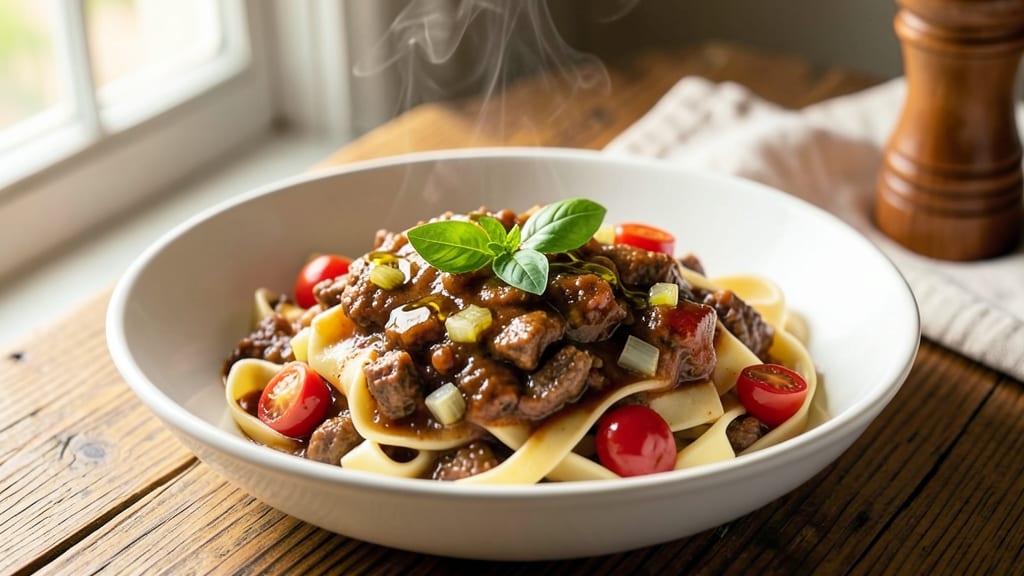
This beef and pork bolognese sauce delivers the kind of deep, umami-rich flavor that transforms simple pasta into a restaurant-worthy meal. 🔥 The secret lies in slow-cooking ground meat with aromatics until it develops that signature meaty sweetness before blending it into a velvety tomato base.
I've perfected this technique over years of cooking for crowds at The Smoky Pig, where we serve hundreds of pounds of pork weekly.
The foundation of great bolognese is proper meat selection and cooking method. Using a 50/50 blend of beef and pork creates the perfect balance of richness and tenderness, while browning the meat thoroughly before adding tomatoes builds layers of flavor that can't be rushed.
This sauce requires patience—simmering for at least 2 hours allows all the ingredients to meld into one cohesive, deeply flavorful sauce.
What you'll end up with is a sauce that's rich yet balanced, with a perfect harmony of meaty umami and bright tomato acidity. The texture is velvety smooth with just enough body to cling beautifully to pasta.
When served over al dente pappardelle or fresh egg noodles, it becomes a meal that feels both comforting and sophisticated.
This recipe makes enough for four generous servings, with leftovers that actually improve overnight. Store in the refrigerator for up to 5 days or freeze for up to 3 months—perfect for meal prep or holiday gatherings.
The flavor only deepens with time, making it ideal for making ahead when you know you'll be busy later.
Ingredients for beef and pork bolognese sauce
The secret to restaurant-quality bolognese: slow-cooked meat and umami-packed tomatoes. Just 15 ingredients, maximum flavor.
| Ingredient | Amount | Notes |
|---|---|---|
| Ground Beef (Chuck) 🥩 | 1 lb | 80% lean, finely ground |
| Ground Pork 🐖 | 1 lb | Finely ground, lean preferred |
| Extra-Virgin Olive Oil 🫒 | ½ cup | For browning meat, fruity |
| Yellow Onion 🧅 | 1 whole | Medium, finely diced |
| Carrots 🥕 | 2 whole | Medium, finely diced |
| Celery Stalks 🌿 | 2 whole | Finely diced, fresh |
| Garlic Cloves 🧄 | 4 cloves | Fresh, minced |
| Canned San Marzano Tomatoes 🍅 | 2 cans | 28 oz each, crushed by hand |
| Tomato Paste 🍅 | ½ cup | High-quality, smooth |
| Dry Red Wine 🍷 | ½ cup | Bold, like Cabernet |
| Beef Stock 💧 | 1 ½ cups | Homemade or high-quality |
| Dried Oregano 🌿 | 1 tsp | Mediterranean blend preferred |
| Dried Basil 🌿 | 1 tsp | Or 0.25 cup fresh |
| Ground Black Pepper 🌶️ | 1 tsp | Freshly cracked |
| Kosher Salt 🧂 | 1 ½ tsp | Adjust to taste |
The meat blend is non-negotiable—80% lean chuck beef gives that signature deep flavor, while pork adds tenderness (trust me, the 50/50 ratio is perfect). Grab both at Whole Foods or your butcher—they'll grind it fine if you ask. For the aromatics, fresh celery, carrots, and onion (the classic 'soffritto') build the sauce's foundation. I always double-check the San Marzano tomatoes—their natural sweetness cuts through the richness. If you can't find them, any high-quality crushed tomatoes work, but don't skip the tomato paste—it thickens beautifully and adds depth.
No red wine? Substitute beef stock with 1 tbsp balsamic vinegar for that same tangy depth. Fresh basil is ideal, but dried works at one-third the amount (and lasts forever). The oregano? Mexican oregano has a brighter flavor, but regular dried is fine. For the stock, homemade is best, but store-bought like Pacific Foods is a solid backup. Want more richness? Add 1 tbsp soy sauce—it boosts umami without overpowering. The key is patience: don't rush the browning—that's where all the flavor develops.
This sauce tastes even better the next day—make a double batch and freeze half for later. Store leftovers in the fridge for up to 5 days (covered tightly) or freeze for 3 months. For serving, reheat gently on low heat—never microwave, or it'll break apart. I always keep a jar in the freezer for lazy weeknights. Pro tip: Add a splash of pasta water when reheating to loosen it up.
Why You'll Love This Recipe
- One-Pot Magic: The beef and pork combo browns like a dream—no flipping, no fuss—while the onions and carrots soften into the sauce. I swear, I’ve made it while chatting on the phone.
- Rich Without the Drama: That chuck and pork blend? Deep, savory, and meaty without needing fancy techniques. The olive oil keeps it silky, and honestly, the carrots add just enough sweetness to balance the whole thing.
- Leftover Goldmine: This sauce tastes better the next day—yes, really. I freeze half in portions, and it’s my go-to for busy nights. (My kids argue over who gets the leftovers.)
- Budget-Buster Flavor: Ground chuck and pork stretch for miles, and the veggies bulk it up without breaking the bank. It’s the kind of dish where you double the batch and still feel like you’re treating yourself.
Step-by-step instructions for beef and pork bolognese sauce
This is where the magic happens—where simple ingredients transform into a sauce so rich it'll make you want to eat it with a spoon.
🔥 Step 1: Brown the Meat for Maximum Flavor
Heat a large, heavy-bottomed pot over medium-high heat and add 0.5 cup extra-virgin olive oil. Once shimmering, add the 1 lb ground beef (chuck) and 1 lb ground pork all at once. Let them cook undisturbed for 5-7 minutes—this is critical for developing that deep, caramelized crust.
Use a wooden spoon to break up the meat into small, even crumbles. You're looking for deep brown color and golden edges—this isn't just cooking, it's building flavor. If the pan gets too crowded, work in batches. Once fully browned (about 10-12 minutes total), transfer the meat to a plate and set aside.
🍳 Step 2: Sauté the Vegetable Base (The Holy Trinity)
In the same pot, reduce heat to medium and add 0.5 cup extra-virgin olive oil if needed. Add the 1 whole yellow onion, 2 whole carrots, and 2 whole celery stalks, all finely diced. Cook for 8-10 minutes until the vegetables soften and begin to caramelize—this should be your new favorite smell in the kitchen.
Add the 4 cloves garlic cloves, minced, and cook for another 30 seconds until fragrant. Here's the thing—don't let the garlic burn. It'll turn bitter faster than you can say "disaster." If it starts to darken too quickly, remove the pot from heat for 10 seconds. This aromatic base is the foundation of your sauce.
🥘 Step 3: Build the Sauce with Wine and Tomatoes
Pour in the 0.5 cup dry red wine and scrape up all those delicious browned bits from the bottom of the pot—this is called deglazing, and it's where all the flavor hides. Let the wine simmer for 3-4 minutes until it reduces by half and the alcohol cooks off.
Add the 0.5 cup tomato paste and stir to combine completely. This is your thickener and flavor amplifier. Then pour in the 2 cans crushed San Marzano tomatoes and 1.5 cups beef stock. Stir well, bring to a gentle simmer, and let it cook uncovered for 20 minutes, stirring occasionally. You want the sauce to thicken slightly but still remain saucy.
🔥 Step 4: Simmer Until Rich and Velvety
Return the browned meat mixture to the pot and stir to combine. Add the 1 tsp dried oregano, 1 tsp dried basil, 1 tsp ground black pepper, and 1.5 tsp kosher salt. Here's where the sauce transforms—simmer uncovered for 45-60 minutes on low heat, stirring occasionally.
You're looking for a sauce that coats the back of a spoon with deep red color and silky texture. If it gets too thick, add 1-2 tablespoons water or beef stock to reach your desired consistency. The longer it simmers, the more complex the flavors become—this isn't a rush job. Taste and adjust seasoning as needed.
⏰ Step 5: Rest and Perfect the Texture
Once your bolognese reaches that perfect thick, velvety consistency, remove it from heat. Let it rest for 15 minutes at room temperature—this allows all the flavors to meld together and the sauce to thicken slightly. Here's a pro tip: if you're serving it with pasta, reserve 1 cup of the pasta water to thin the sauce if needed.
This resting period is crucial. It's tempting to serve it immediately, but patience here makes all the difference. The sauce will develop even deeper flavor and achieve that luxurious, restaurant-quality texture that makes this dish so special. Serve over al dente pasta and watch it disappear faster than you can say "more wine, please."
Pro Tips For Making Beef And Pork Bolognese Sauce
- Brown the Meat Slowly: After breaking up the ground beef and pork with your hands, let it sear in small batches over medium heat—not high. I used to rush this and ended up with gray, rubbery meat instead of deep, caramelized flavor. Give each batch 8-10 minutes, stirring occasionally, until it’s dark and crispy in spots. The pork will release fat faster, so skim it often but don’t rush.
- Dice Onions Like Dice: Tiny, even dice (¼-inch or smaller) melt into the sauce without leaving chunks. I learned this the hard way—once I used uneven pieces and spent the next 20 minutes chewing onion. Use a sharp knife and cut the onion in half first, then slice into strips before dicing. This recipe isn’t forgiving with texture.
- Skip the Crowding Pan: Overfilling the pan steams the meat instead of browning it. Work in batches—no more than 1 pound of meat at a time—so you’ve got room to stir and crisp. I know, it’s extra work, but skipping this step means your sauce will taste like it came from a restaurant, not a rushed weeknight.
- Deglaze with Wine First: After browning, splash in ½ cup dry red wine (or broth if you’re skipping alcohol) and let it bubble for 2 minutes before adding tomatoes. The alcohol burns off, but the quick simmer pulls up all those stuck-on bits—the thing that matters most for depth. I was skeptical until I tried it; now I never skip it.
Essential equipment for perfect results
Heavy-Bottomed Pot
You absolutely need a large, heavy-bottomed pot—I swear by my All-Clad 6-quart Dutch oven—to handle the long simmer without scorching. The thick base distributes heat evenly, preventing hot spots that can burn your sauce.
A stainless steel pot is ideal, but enameled cast iron like Le Creuset works beautifully too. Avoid thin aluminum pots—they heat unevenly and can ruin your sauce's texture. 🔥
Wooden Spoon
A long-handled wooden spoon is non-negotiable for stirring and scraping up those precious browned bits from the bottom of the pot. I prefer maple or hickory because they're durable and gentle on non-stick surfaces.
Avoid metal utensils—they can react with acidic ingredients like tomatoes. My go-to is a 12-inch wooden spoon from OXO Good Grips, which stays sturdy even during long simmers.
Fine-Mesh Strainer
For a silky-smooth bolognese, strain the sauce through a fine-mesh strainer before serving to remove any tough meat fibers or herb stems. I use a stainless steel mesh strainer from Kitchenaid—it's sturdy and won't clog easily.
If you're serving it immediately, skip this step, but for restaurant-quality texture, straining makes all the difference. Pro tip: Line the strainer with a cheesecloth for extra smoothness.
Meat Thermometer
A meat thermometer ensures your meat reaches the perfect internal temperature for browning—160°F for ground pork and 165°F for ground beef. I recommend the ThermoWorks Smoke because it's precise and durable.
Insert it into the thickest part of the meat to avoid false readings. This tool prevents undercooked meat while ensuring maximum flavor development through proper browning. 🌡️
Immersion Blender
While traditional bolognese is chunky, blending a portion of the sauce creates a luxurious, velvety texture that coats pasta beautifully. An immersion blender like the Ninja CB101 is perfect for this—it blends directly in the pot without transferring hot sauce.
For a smoother finish, blend about half the sauce before mixing it back in. This step is optional but elevates the dish to next-level restaurant quality.
Air-Tight Storage Containers
For leftovers, store your bolognese in glass airtight containers like Pyrex or Le Parfait to maintain freshness. These containers prevent odors from seeping in and keep the sauce tasting vibrant for up to 5 days in the fridge or 3 months in the freezer.
Avoid plastic containers—they can absorb flavors and degrade over time. Label your containers with the date to track freshness, especially when freezing.
Nutrition facts
Frequently asked questions about beef and pork bolognese sauce
Why mix beef and pork in bolognese?
The beef (especially chuck) provides that deep, meaty flavor that defines traditional bolognese, while the pork adds tenderness and fat that keeps the sauce rich without being greasy. The 50/50 ratio creates the perfect balance—beef for structure, pork for silkiness. This combo is what makes my restaurant sauce so addictive!
Can I make this sauce in a slow cooker?
Brown the meat first in a skillet, then transfer everything to your slow cooker. Cook on low for 6-8 hours or high for 3-4 hours, stirring occasionally. The slow cooker's gentle heat enhances the flavors even more—just add 1/2 cup extra stock if it gets too thick during cooking.
What's the best pasta to serve with this sauce?
For maximum sauce cling, use pappardelle (wide ribbon pasta) or tagliatelle. The flat surfaces catch the sauce beautifully. For a heartier option, try fresh egg noodles. Avoid thin spaghetti—it can't hold up to this rich sauce. Pro tip: Cook pasta 1 minute less than package instructions for al dente perfection.
How do I fix a bolognese that's too thick?
Never fear—this is easily fixed! Add 1-2 tablespoons of beef stock or pasta water at a time, stirring well between additions. For a smoother texture, blend half the sauce with an immersion blender, then mix back in. If it's still too thick after adding liquid, simmer uncovered for 5 more minutes to reduce slightly.
Can I make this sauce ahead of time?
This sauce actually tastes better the next day! Make it 24 hours ahead and store in the fridge. Reheat gently on low heat, adding 1-2 tablespoons of water or stock to loosen it up. For freezing, portion into airtight containers and freeze for up to 3 months. Thaw overnight in the fridge before reheating—never microwave, as it can break the sauce's texture.